
The BS-VI norms are expected to increase the price of two-wheelers by 10-14 per cent.

Priced at Rs 754,689, this is the sixth model from the company's portfolio after Alto, WagonR, Swift, Baleno and Dzire to be BS-VI compliant.
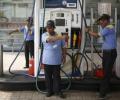
Automobile manufacturers said Euro-VI grade vehicles will not hit the roads before 2020 but the advancement gives them confidence to make investments in manufacturing such vehicles.

A nationwide and compulsory switch to BS-VI is due from April 1, 2020. Amid increase in input and other costs, companies had decided to increase the price of their vehicles from January 2020. This is expected to push sales of passenger vehicles by 2 to 4 per cent in December; reportedly, bookings are in that range.

Union Minister of Road Transport and Highways Nitin Gadkari on Tuesday unveiled the prototype of the world's first Bharat Stage (BS)-VI-compliant electrified flex-fuel car, developed by Toyota Kirloskar Motor. The car, which runs on 100 per cent ethanol (E100), is based on the Toyota Innova HyCross. It can cover 40 per cent of its distance on ethanol and the remaining 60 per cent on electric, with the petrol engine shut off.

From April 2020, manufacturers will have to hike prices of diesel cars sharply to accommodate the costs incurred in the transition to BS VI emission norms, and widening the gap between a diesel and petrol car.

Market leader Maruti Suzuki India's passenger vehicles sales declined by 2.34 per cent last month at 133,702 units. Hero MotoCorp reported total two-wheeler sales of 480,196 units last month, down 20.05 per cent.

A government adviser has called for India to reintroduce a petrol variant with a lower ethanol blend, such as E10, alongside the current E20 fuel. This move aims to protect millions of older vehicles, particularly two-wheelers, which may experience performance issues and damage from the higher 20 per cent ethanol blend.

Fuel pumps are not dispensing fuel to vehicles without valid PUC certificates, and this is being enforced with the help of automatic number plate reader cameras, voice alerts at pumps, and police support.

Mercedes-Benz India plans to continue introducing hybrid vehicles, including the new AMG E 53 plug-in hybrid EV, to meet consumer demand, viewing hybrids as a crucial bridge to full electrification despite the absence of supportive government policies.

The Indian government has defended its E20 ethanol blending programme, stating that extensive testing and field experience show no evidence of abnormal engine wear, corrosion, or reduced vehicle life, despite a potential 2-6% reduction in fuel economy.

A three-judge bench headed by Justice Madan B Lokur made it clear that only BS VI compliant vehicle shall be sold in the country from April 1, 2020.

India's rapidly ageing truck fleet, with 42% of vehicles over 12 years old, is set to trigger a replacement-driven growth of 3-5% annually over the next five years.

Tourism stakeholders are raising concerns about the safety and environmental impact of ageing diesel-powered safari vehicles operating in Ranthambore Tiger Reserve after a recent breakdown left tourists stranded.

The Commission for Air Quality Management (CAQM) has revoked restrictions imposed under GRAP 3 in Delhi-NCR following improvements in air quality. Non-essential construction and demolition activities are now allowed to restart, and restrictions on vehicles have been lifted.

The Supreme Court rejected a PIL challenging the nationwide rollout of 20% ethanol-blended petrol (EBP-20), citing benefits to sugarcane farmers. The plea alleged incompatibility issues with older vehicles.

A thick layer of toxic smog enveloped the national capital on Saturday as air quality deteriorated sharply, prompting the Commission for Air Quality Management (CAQM) to invoke the strictest curbs under Stage IV of the Graded Response Action Plan (GRAP) across Delhi-NCR.

Delhi cabinet minister Parvesh Verma launched a sharp attack on the previous AAP government, alleging failure to carry out basic civic works over the past decade, leading to issues like garbage mountains, broken roads, pollution, and Yamuna cleaning.

Passenger and commercial vehicle prices are expected to rise as automobile companies invest in upgrading vehicles to meet stricter emission norms that kick in from April next year. The Indian automobile industry is currently working to make their products meet the second phase of Bharat Stage VI, equivalent to Euro-VI emission norms, in real time driving conditions. Four-wheeler passenger and commercial vehicles will need more sophisticated equipment to be added to meet the next level of emission standards.

India will switch to the world's cleanest petrol and diesel from April 1 as it leapfrogs straight to Euro-VI emission compliant fuels from Euro-IV grades now -- a feat achieved in just three years and not seen in any of the large economies around the globe. India will join the select league of nations using petrol and diesel containing just 10 parts per million of sulphur as it looks to cut vehicular emissions that are said to be one of the reasons for the choking pollution in major cities.
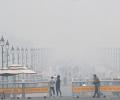
The SC questioned the Delhi government over delay in implementation of stricter anti-pollution measures under GRAP-4, and said it will not allow scaling down of the preventive measures without its prior permission.

Around 23 per cent of all units sold by the company in the domestic market currently are diesel cars.

The challenges of transition to stricter emission norm BS-VI from BS-IV and compliance to new safety norms thereby making vehicles costlier are lurking around the sector.
Govt may delay BS-V and -VI implementation by a year

The entry level car, brainchild of Ratan Tata who envisaged giving a safer and affordable alternative to families riding on two-wheelers, received lacklustre response from the Indian consumer. Tata Motors to bid adieu to Nano from April 2020.

With diesel cars set to become costlier from next year with the implementation of stricter BS-VI emission norms, major automakers in India are contemplating about the future of such vehicles in their portfolios.

The diesel car becomes too expensive with BS-VI and market assessment says the customer will not buy it at that price, says R C Bhargava, chairman, MSIL. He expects buyer preference to change swiftly in favour of petrol, CNG, and other alternative technologies.

Weak consumer sentiment across urban and rural markets due to slow farm inflows, subdued agri-commodity prices, rising cost of ownership as a result of regulatory changes including safety, emissions, vehicle registration, along with a rise in interest cost/EMI, have impacted demand.

The two-wheeler industry was hit by an increase in insurance rates, liquidity crunch, poor sentiment, rural distress and uncertainty over the BS-VI regulations, among other factors.

Let alone a discount, they might not even get the model, variant or colour of choice in BS-IV-compliant vehicles.
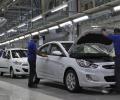
BS-VI emission norms and the COVID-19 lockdown impacted the dispatches.

While hybrids, CNG and biofuels found favour in 2018 among many carmakers including Maruti Suzuki, Mercedes-Benz, Toyota and Honda, others such as M&M and Tata Motors have shown full faith in electric vehicles.

Delhi's air quality deteriorated significantly on Monday, with areas like Dwarka, Mundka and Najafgarh recording an AQI of 500, the worst this season. The city's overall AQI reached 491, triggering the implementation of the Graded Response Action Plan (GRAP) Stage-IV restrictions in Delhi-NCR. Doctors warned of health risks, urging people to wear N95 masks and avoid outdoor activities. The Supreme Court questioned the Delhi government on its anti-pollution measures and warned against scaling down preventive measures without its permission. Delhi Chief Minister Atishi accused the BJP-led central government of political maneuvering while neglecting stubble burning in states it governs. Meanwhile, the city enforced stricter pollution control measures, including a ban on truck entry and suspension of construction activities. Air purifier sales surged, reflecting the public's concern over the severe air pollution.

Maruti has announced it will phase out diesel variants from April 1, 2020, when stringent BS VI norms take effect

A complaint addressed to Saxena in June this year had claimed that the appointment of the minister of transport as the chairman of the committee for tendering and procurement of buses by Delhi Transport Corporation was done in a "premeditated manner".

Apart from physical stores, the company operates 2,700 digital touch points in the form of web pages, which is gaining good traction from tier-II and III centres.
The FM said, change in the mindset of the millennials not to commit any EMIs towards buying an automobile and instead taking Ola, Uber or the Metro (train) services also led to automobile sector slowdown.

Passenger vehicle sales in India could hit a record of over 38 lakh units in FY23 but the strong growth momentum is not expected to carry over to 2023-24 with pent-up demand already been released, according to Tata Motors Passenger Vehicles managing director Shailesh Chandra.
A bench headed by Justice Arun Mishra said Bharat Stage-IV vehicles sold after March 31 this year and those whose details have not been uploaded on the e-Vahan portal of the government will not be registered.

The company would roll out the BS-VI range of products and an automatic transmission version of its latest car 'Triber' next year.
